Services Provided
Language Disorders
A language disorder is a communication condition that affects a person’s ability to understand (receptive language), express (expressive language), or use language appropriately in social contexts (pragmatic language). It can impact one or more language domains—vocabulary, grammar, sentence structure, discourse, and social use of language—and can occur in one or both languages for bilingual individuals.

Speech Disorders
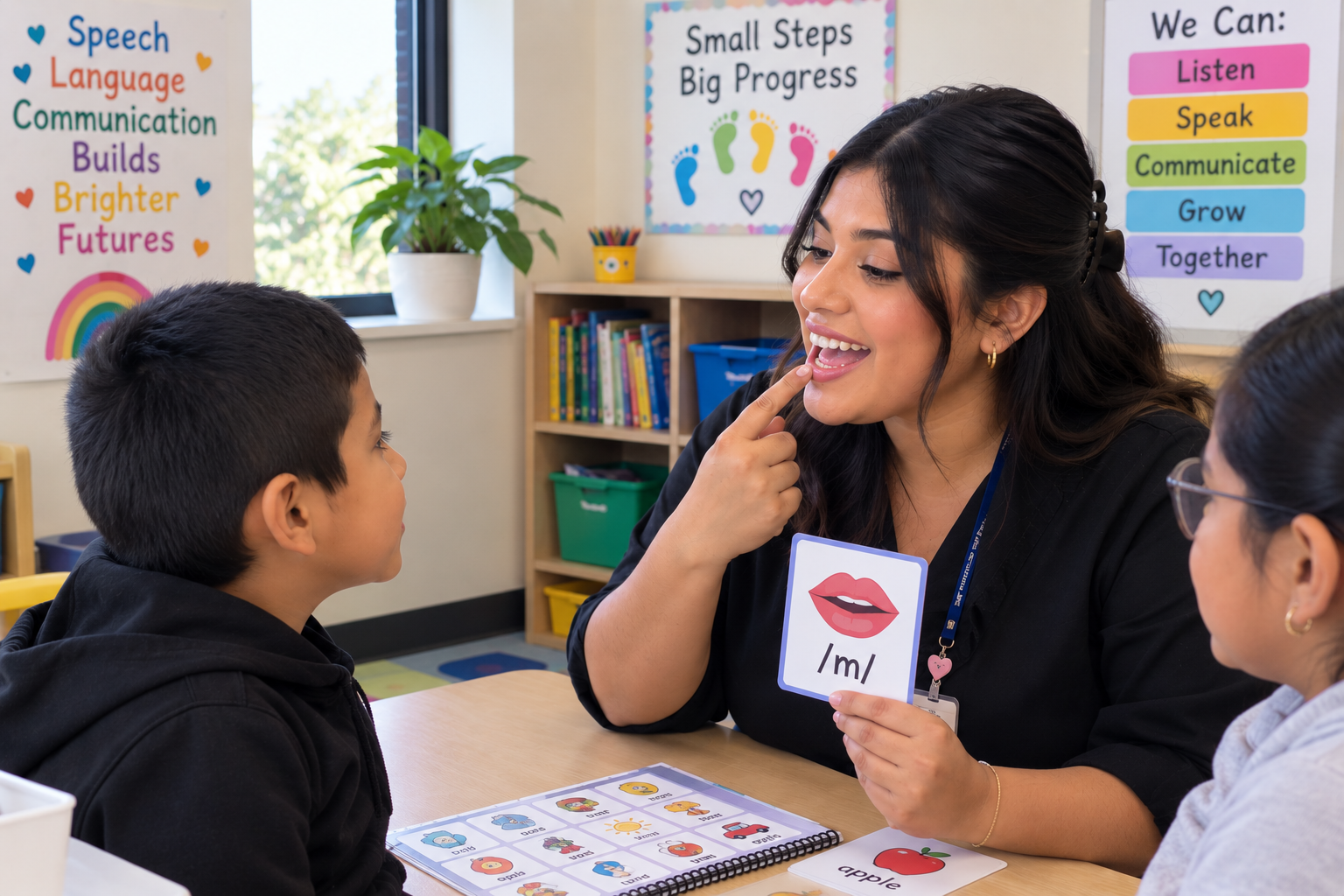
A speech disorder is a communication condition in which a person has difficulty producing sounds that create words, disrupting clear and effective spoken language. Speech disorders can affect articulation (making individual sounds), fluency (flow and rhythm of speech), voice (pitch, volume, quality), and motor planning (coordinating the movements needed for speech).
AUGUMENTAIVE ASSITIVE COMMUNICATION (AAC)
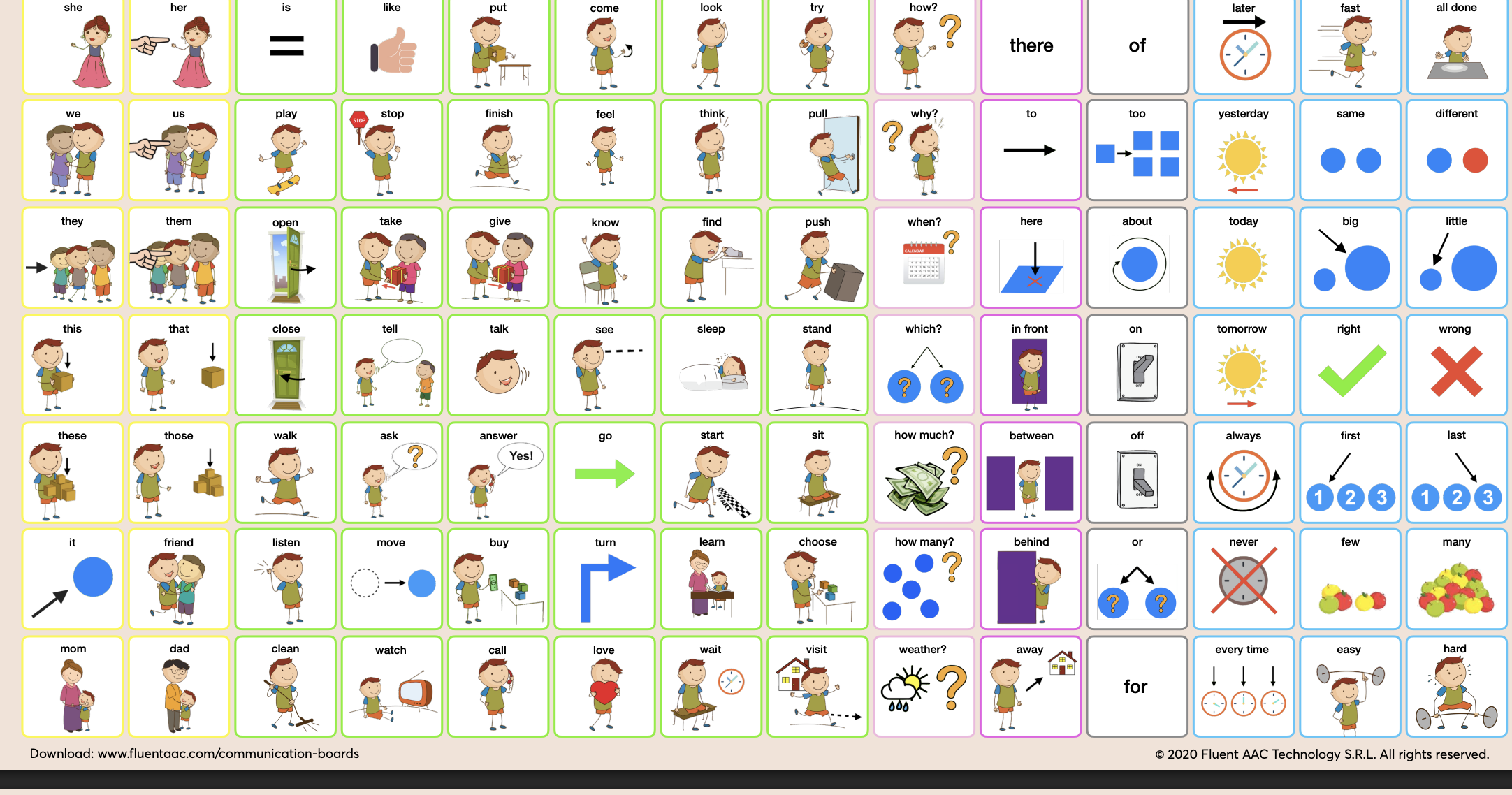
AAC (Augmentative and Alternative Communication) is any method, system, or device that helps people who have difficulty speaking to communicate more effectively. AAC supports expressive and receptive language and can be temporary or long-term depending on an individual’s needs.
Types of AAC.
Low-tech: Picture boards, communication books, symbol cards, letter/word boards.
Mid-tech: Simple electronic devices that play recorded messages or sequences.
High-tech: Speech-generating devices and apps on tablets or dedicated devices that produce synthesized or recorded speech; often include dynamic displays, symbol libraries, and language prediction.

Feeding Therapy
Does your child struggle with certain food textures, experience anxiety at mealtime, or have difficulty at mealtime? Feeding therapy is a specialized therapeutic approach focused on improving a child’s ability to eat and drink safely, efficiently, and enjoyably. It addresses difficulties with oral motor skills, sensory processing, swallowing, feeding behaviors, and mealtime routines
Key areas addressed
Oral motor function
Feeding skills and transitions.
Mealtime behavior and routine
Social Cognitive
Social cognitive speech therapy focuses on helping children develop the social communication skills needed to interact successfully with others. This approach targets the how and why of communication—pragmatics—rather than only speech sounds or vocabulary. It is especially important for children who have difficulty using language in social contexts, including those with autism spectrum disorder,ADHD, social (pragmatic) communication disorder, or other social language delays.